I left Seattle casually after 8am figuring that would give the DOT some time to clear the road. By the time I got to the pass, it was sunny and there was a bit of slush on the road, so nothing to worry about.
 The scene when I arrived
I geared up in the parking lot where there were already 30+ cars! I guess many others had the same idea. I hiked up the stairs and walked in the snow a bit before putting my skis on. The snow was already fairly tracked out from previous days. (Probably Sunday.) So I went in search of fresh tracks by skinning under the Skyline Chair and eventually reaching the top of the Brooks Chair in a half hour or so. I transitioned at the top of the chair. Four months is plenty of time to get a little rusty transitioning. I then turned the skis downhill to go nowhere. The lower angle and deep unconsolidated snow was sticky. (Those factors combined with a need for a wax.) I worked my way to a slightly steeper section and mostly headed straight downhill without turning. It was the only way to keep up speed. Then I jumped back on a cat track for a bit before trying some other slope near the bottom. While I didn't fall, things were not smooth, and I wouldn't exactly say I enjoyed the run. So I decided to try something different on the next lap.
The next lap had me skinning to near the top of the Hogsback Lift. Once near the top, I decided to turn around and head down before getting into terrain I didn't want to be in. On the way up and from where I transitioned, I could see plenty of rocky areas that did not have good coverage, and I wanted to avoid those. So I ended up riding a cat track almost all the way down from my transition with a slight excursion into the powder near the bottom. Once again, the deeper untracked snow proved slow and unenjoyable. The time was now 12:30pm. I wanted to get one more run in that I really could enjoy. So I transitioned to skinning and headed up.
 Dork
DorkThis time I headed up near the Big Chief Chair, skinning up the Showcase run. It was fairly tracked from early in the day as well as days earlier. (There were about 25 teenage boys with snowboards running up the slope to catch turns. They were also building kickers near the bottom of the slope.) I went up the slope for almost 30 minutes and decided to turn around at a flatter section of slope so I would not have to attempt to ski down this slower low angle area. During my transition I was joined by one of the teenage snowboarders. We had a chat about whether the ski area could kick us out or not and then he took his ride down. I followed shortly afterward on what was my favorite run of the day! Unfortunately, I was looking to get home and get my skis to the shop for a wax as I hope to get out later this week. So I headed to the car after ending on a high note.
 Closing shot
Overall, I enjoyed my day out. The weather was mostly sunny, and fairly warm. (High was supposed to be 33°) I skinned in a light base layer and shell pants. I put on a shell jacket for the descents. It was nice to get back into the motion of skinning/skiing as well as working on my transitions without having others to wait for me. I tried out my new ski helmet which seemed to work as advertised and will be anticipating bringing it on other trips in the future.


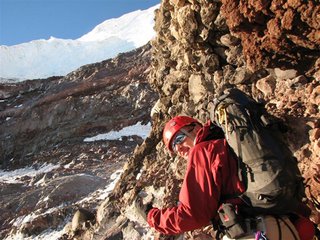 It's been 3 weeks since I've been in the park... Thankfully, some of the climbing rangers have been helping w/ route and condition updates. That said, we still love your climbing reports. Over the next day or two, I'll upload many of the great reports climbers have been sending.
 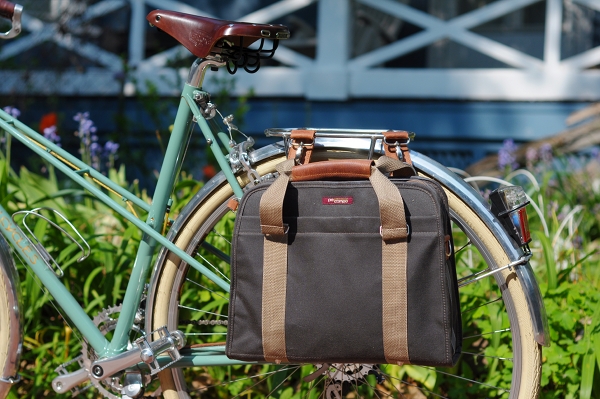 Po Campo is a small Chicago-based company that has been making a variety of bicycle-compatible women's handbags since . This year they introduced a larger, briefcase-like pannier to their lineup and I acquired one in trade a couple of months ago. The Loop Pannier is available in several floral patterns, but I opted for the more subdued waxed canvas version. It is umber with tan straps, metal buckles, and honey leather trim. At 14"x10"x3.5" the size is small enough so that there is no heel strike on bikes with short chainstays, but large enough so as to fit some laptops. These bags are designed to be used on the bike as panniers, off the bike as shoulder bags, and as luggage attachments while traveling.
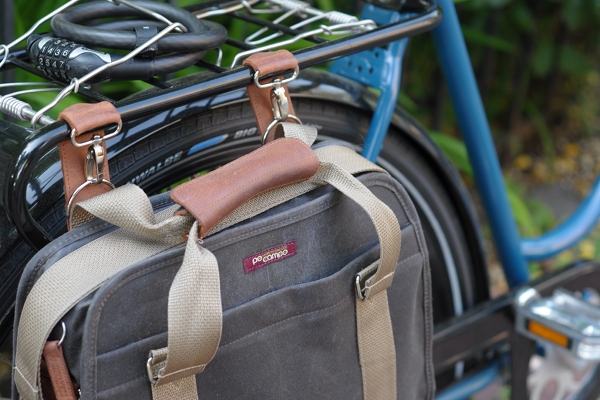 The Po Campo attachment system consists of leather straps with sturdy metal clasps.When I saw this, it was one of those "why did no one else think of this earlier?" moments. The benefit of this design is that it can fit bicycle racks with any tubing diameter. Other quick-release systems max out at 16mm tops, which means that they will not fit some heavy-duty Dutch and Roadster racks. None of our other panniers are compatible with the monstrous tubing on this Pilen rack - but the Po Campo straps have plenty of room to spare.
 While using the clasps is not quite as instantaneous as the sort of quick release where you lift up the handle and the hooks open up, it is still easy and quick.
 Since the straps are soft and flexible, they also offer the benefit of being adaptable to the rack's layout. Some racks have complicated rat-trap setups that can interfere with typical pannier hooks. The Po Campostraps can simply be looped around them. The more I used this system, the more I began to appreciate the design. Those who dislike plastic hooks will also rejoice at the complete lack of plastic here; it's all metal.
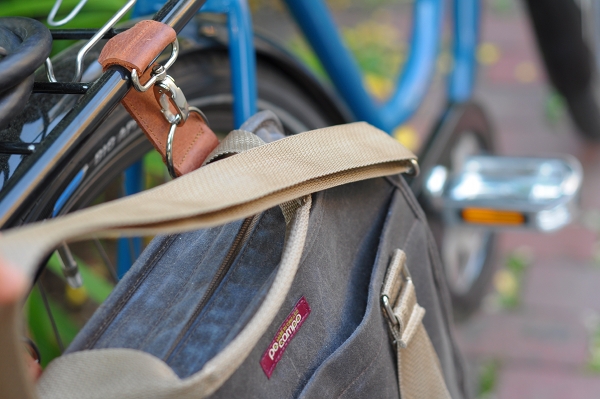 There are two short straps integrated into the pannier, and a longer detachable shoulder strap. While initially managing the system of straps seems complicated, it ends up being very intuitive.
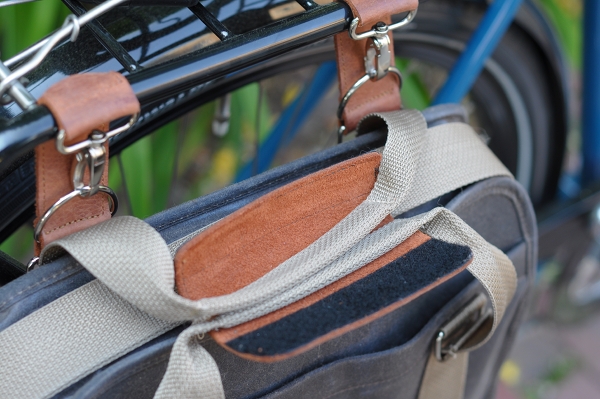 The long shoulder strap folds over the top of the bag. Then, the second of the short straps gets tucked into the leather handle attached to the first, which closes with velcro. This keeps all three straps neatly tucked in and away from the spokes.
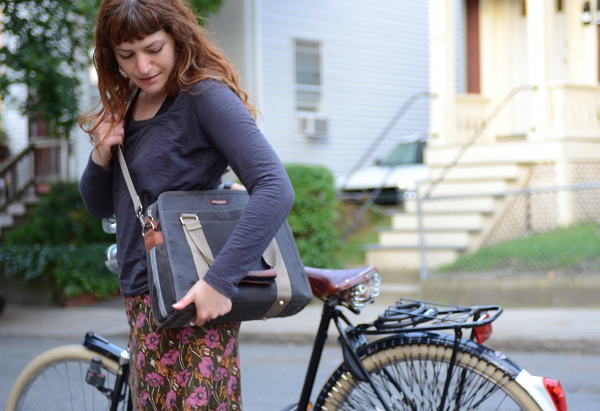 When the bag is off the bike, it can either be handheld, or used as a shoulder or messenger bag. I prefer the latter, especially since adjusting the shoulder strap on the go is very easy - the adjustment buckle slides freely.
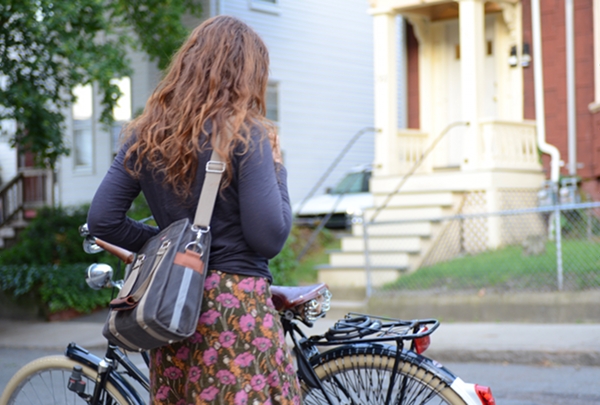 I have walked around with the bag as pictured for a couple of miles and it felt fine. I've also shortened the strap and have worn it over one shoulder, like a handbag. Either way is pretty comfortable and the clasps absolutely do not catch on my clothing. It basically feels like a normal bag to carry, not like a bicycle-specific pannier.
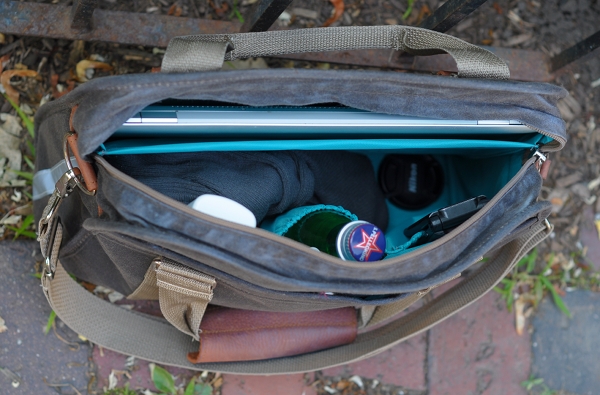 Another feature of the Po CampoI appreciate is the way it is organised inside. There is a large main compartment, and a side compartment that they refer to as a "file/lock pocket." However, I use it for my laptop, which is a MacBook Air and is the perfect size for it. I use the main compartment for clothing, books, notebooks and my DSLR camera.
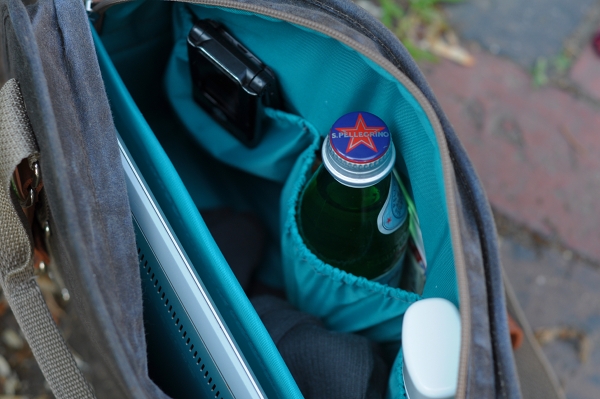 There are also three elasticised interior pockets that will each fit a wallet, phone, writing instruments, or even a small bottle of water.
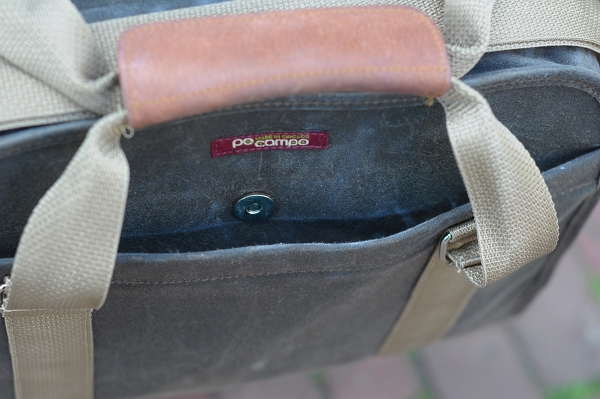 The exterior pocket is quite roomy. It is especially useful for those times you need to remove a sweater or grab some water in traffic.
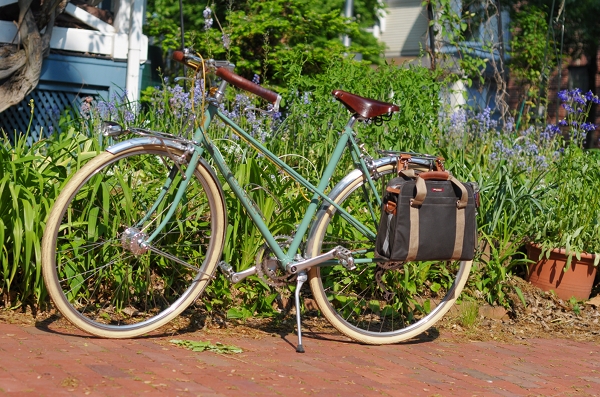 I tend to overpack whenever I leave the house, so this pannier is always bulging with stuff when I use it. Still, the structured design keeps it all looking neat and presentable.
 The reflective strip along the back is nice for extra visibility.
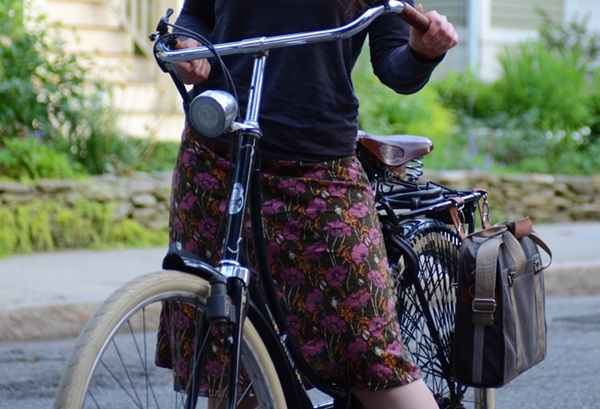 I have tried the Po Campo pannier on five different bikes with different types of racks, and it works well on all of them. I cannot imagine a rack design with which this bag will be incompatible, and in my view that is one of its most valuable features. Other strong points include the durable construction, the professional look, and the ease with which the bag can be used off the bike. This is a small pannier and you will not be able to fit groceries in it; it is really meant as a briefcase/ professional bag and will accommodate only the smaller laptop models. But the compact size has the added benefit of preventing heel strike on bicycles with shorter chainstays.
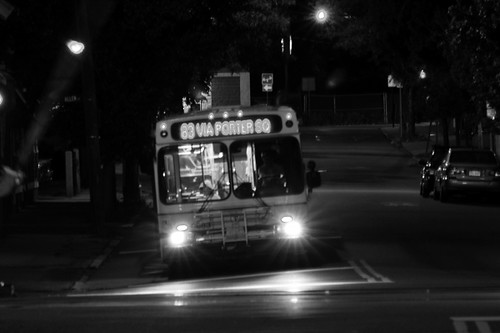 As a cyclist, I doubt that I am alone in my strong dislike of city buses. They are enormous. They make frequent stops and wide turns. They have sizable blind spots. And their operators - overwhelmed with countless stimuli and the stress of keeping to a schedule - don't always notice cyclists in their path. All in all, it seems reasonable to be wary of these vehicles, and prudent to keep away from them whenever possible.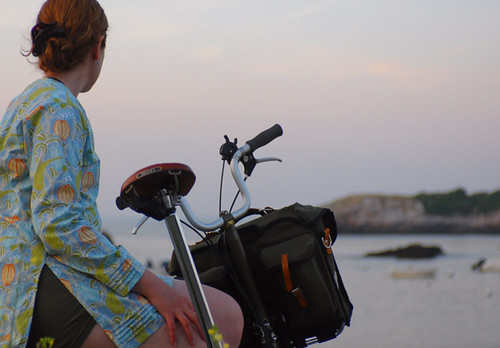


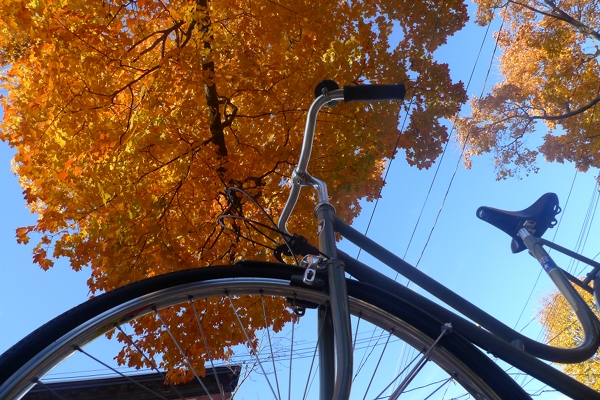 Particularly in New England, November has always struck me as a cruel month. At the beginning, the fiery foliage and the azure skies carry over from October.
 The crisp, but still warm air is charged with just the right amount of electricity to gently stir our emotions. And we are lulledinto a state of self-willed denial that soon it will all be yanked away from us in one fell swoop - replaced with desolate landscapes, freezing temperatures and perilous road conditions... for the next 4 months.
 As far as cycling goes, I must admit the memories ofhow difficult last winter was fill me with dread. I am trying not to panic, but to be prepared instead. And part of that is just being mentally prepared for what's to come.
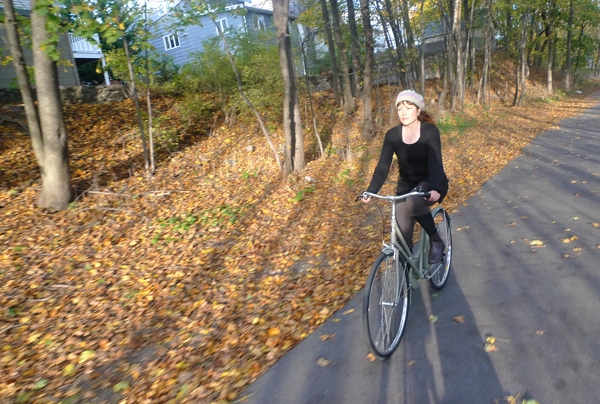 My biggest disappointment last winter was discovering that any kind of sporty cycling was out of the question after temperatures dropped below freezing, because I had trouble breathing at speeds over 10-12 mph. The science of that is still a mystery to me, especially since I can cross-country ski in the winter without experiencing the same problem. And I know that other cyclists havetroublewith this as well - it might just be a genetic difference in how our lungs are structured, whereby for some it is a problem and for others not. This year I will try some tricks that have been suggested to deal with the breathing issue, but if it doesn't work I am prepared to accept things as they are and hang up my roadbikes until spring. Or so I tell myself.
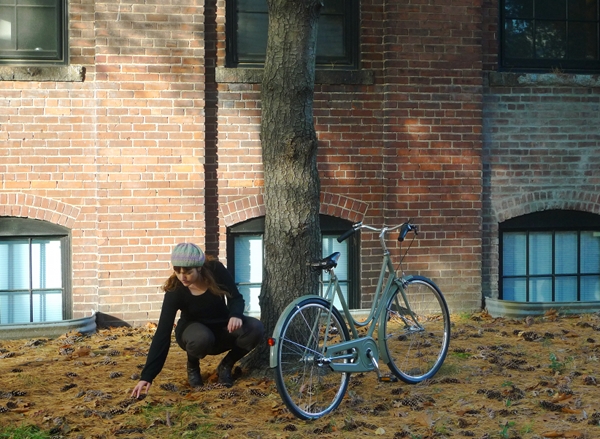 But as far as transportation cycling goes, I do not anticipate any great changes in my routine. Last winter I was able to get anywhere I needed to go on my Pashley, taking it slowly and enjoying its stability and winter-proofness (wide tires, internally geared hub, full chaincase). This winter I am looking forward to seeing how the Gazelle and Bella Ciao perform in comparison. Most likely I will ride the Gazelle for local trips, and the Bella Ciao (after I get a rack and lights for it) for more hilly, long-distance trips. And the rest of my bicycles will be put away, including my custom mixte - which I just cannot bring myself to ride in the winter, yet.
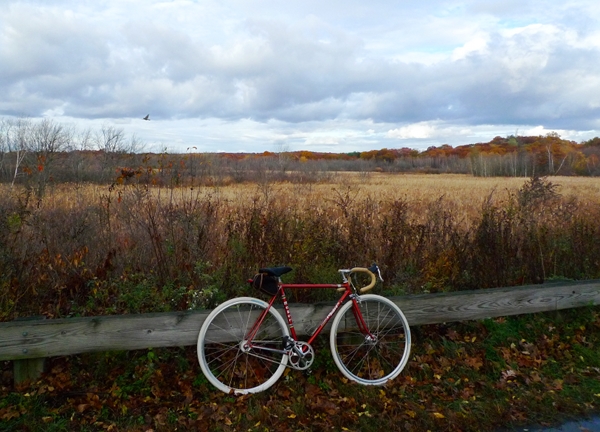 But all this is still in the future. For now November has been good, and the increasingly desolate landscape has a romantic charm to it that I hope it will retain for at least another few weeks. It's a cruel transition, but a trusty bicycle is a good ally to have.

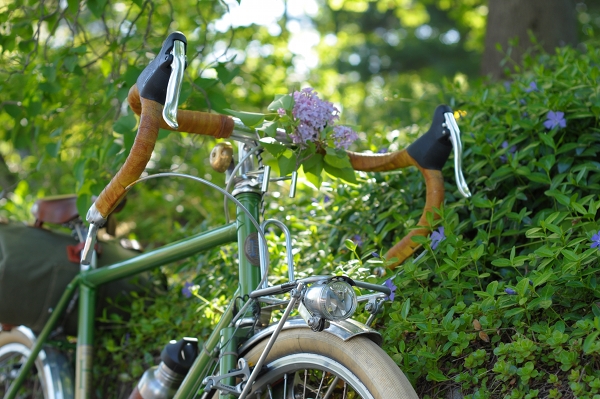 In describing my experience in a paceline training ride earlier, I had written that my Rivendellwas not the right bike for that ride. Subsequently, I've received some suggestions for how to make it faster - including getting narrower tires, installing "brifters," removing the saddlebag, rack and fenders, and stripping off the dynamo lighting. While I appreciate the advice and agree that all of that may indeed improve my paceline performance, I do not plan to make any changes to this bicycle. Right now, I have a bicycle that is perfectfor me as a touring bike. Why turn something that's perfect for one activity into something that's okay but not ideal for another?
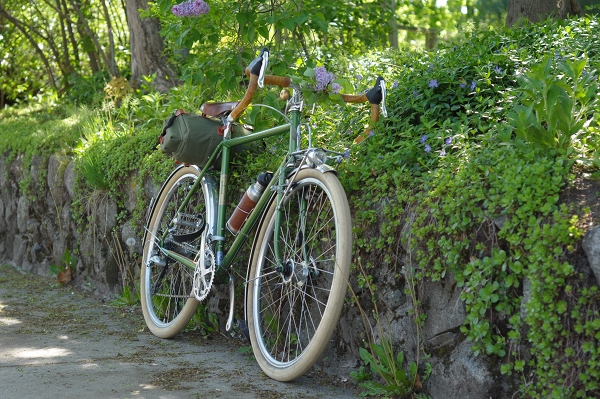 In stating that my Rivendell was not the right bike for a racing team-sponsored paceline ride, I was by no means criticising it or expressing unhappiness with it. I was merely reiterating a simple fact: Touring bikes are not racing bikes.
  A touring bicycle is about exploration and about experiencing one's surroundings. You cannot do that when cycling 6" behind someone's rear wheel at 20mph.
 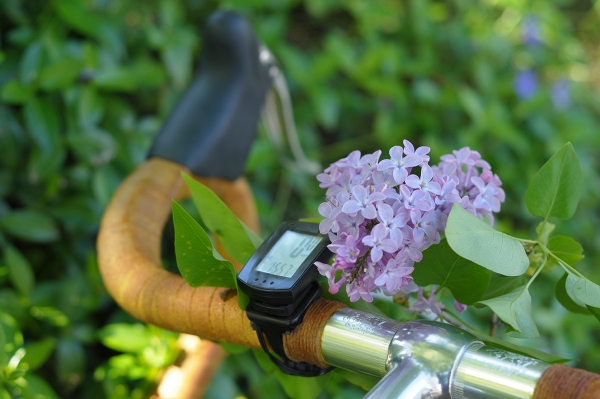 A touring bike is about the long haul and about going at one's own pace.I use the computer as a handlebar-mounted clock and odometer more than I use it as a speedometer - because "how far" is a more interesting question for this bike than "how fast."
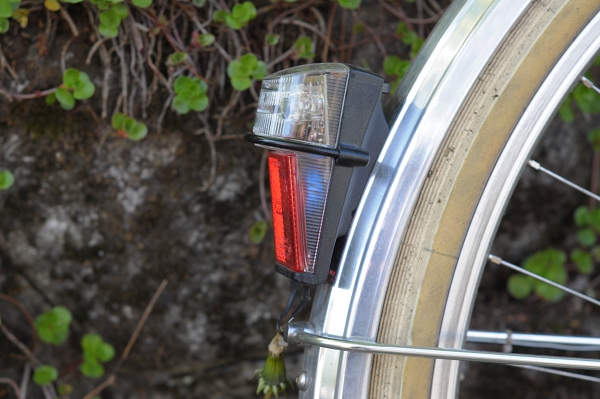 A touring bike is about the freedom of going anywhere, without having to cultivate the handling skills of a pro racer. Comfortable geometry and stable handling enable novice and experienced cyclists alike to ride. My bicycle is easy, and its wide, cushy tires make me immune to most of the fears that plague cyclists on modern roadbikes: potholes, rain, sand, uneven terrain - bring them on. I can even wear nice clothing while I'm at it, because the fenders will protect me from road grime. And with my bright, dynamo-generated lights I can cycle through the night and not worry about batteries.
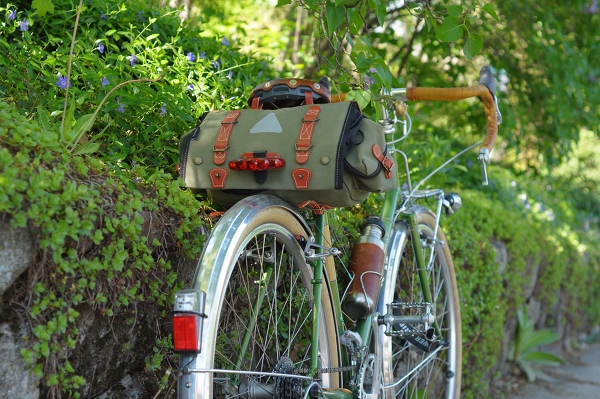 A touring bike is a home away from home. In my saddlebag, on the day this picture was taken I carried: a large DSLR camera, a sweater, a hat, an apple, a notebook, a fountain pen, a bar of chocolate, a saddle cover, gloves, sunscreen, a lock and a mini pump. And that's nothing compared to what I could have brought had I also attached my handlebar bag. Setting off on a racing bike limits you to a training ride and nothing more. On a touring bikea ride can start out as one thing and morph into another. Groceries can be involved, or a spontaneous visit to a friend's house. Who knows!
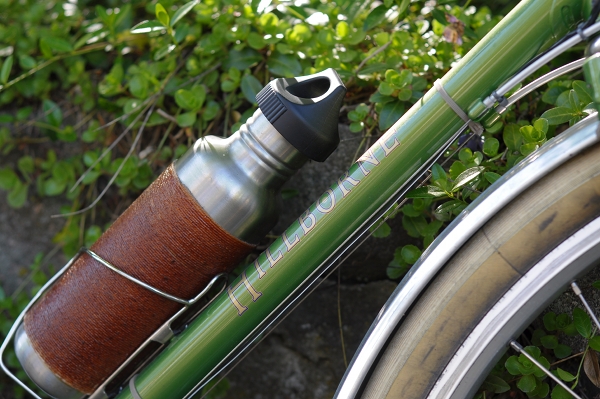 Riding a touring bike is an organic experience. My Rivendell'ssteel, brass, canvas, leather, twine, shellac and rubber fit harmoniously with its riding style and with my enjoyment of exploring nature. It is not about competing with nature with ever-more-efficient materials and aerodynamic postures, but about simply existing.
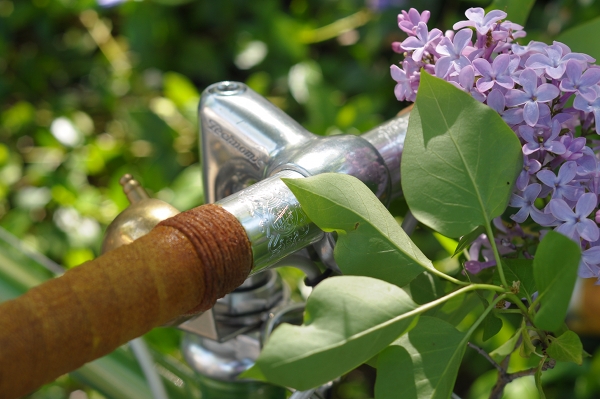 In turning this bicycleinto a performance-oriented bike, I would essentially be giving up the very things that make it special. And that would be a shame.
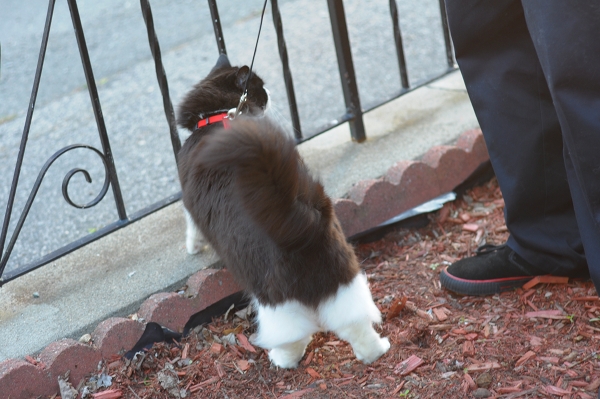 Sure, we may be curious about pacelines and racing.
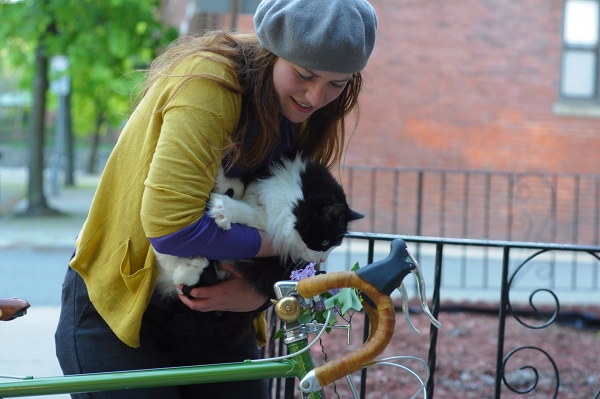 But not at the expense of smelling the flowers. Some bicycles are perfect just the way they are.


